Friday, February 2, 2018

Home Page


English 201 Self-Reflection

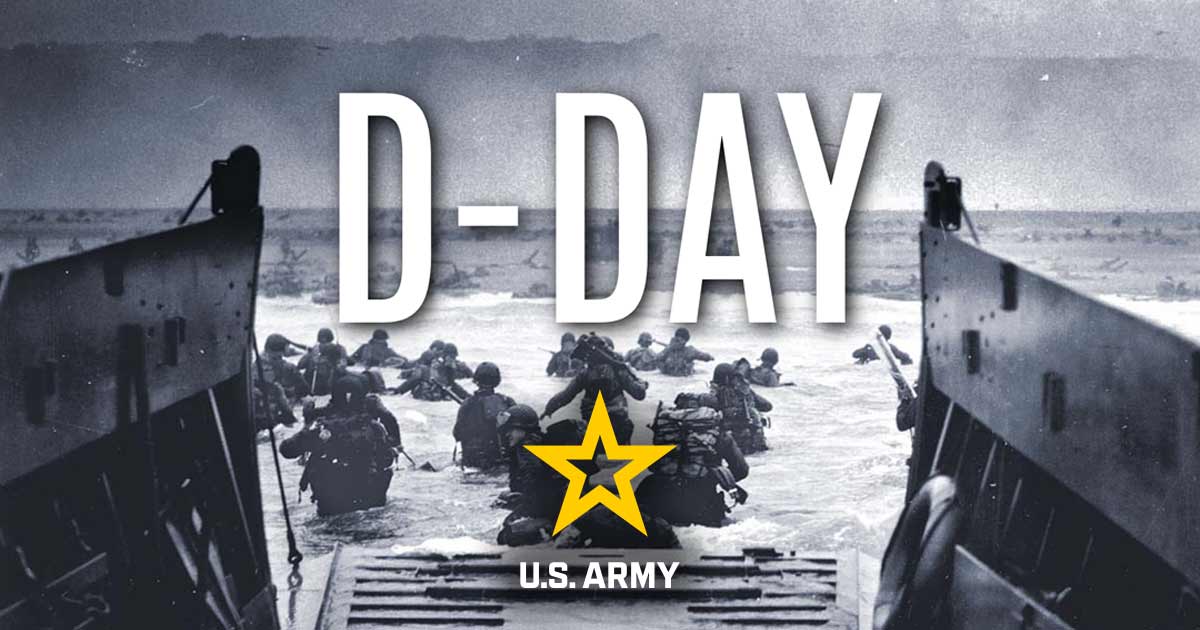
  • The reason I chose my topic D-Day, was because I have always remembered the opening scene to the movie Saving Private Ryan. I still remember first watching the scene when I was 14 years old and being in absolute shock at what I had just seen. Although it was just a movie, it hit me that D-Day actually happened and events similar, if not the same from the movie, actually happened. I remember sitting in disbelief that the world allowed this to happen and to the magnitude it got to. The movie has always been my reminder of what it took to protect my freedom and what it took to protect others in need as well.
    My research process consisted of using article from credible and known sources. I also looked into first hand accounts of D-Day on ProQuest and other websites. I learned how to properly use databases and how to find credible sources. I have always done research projects for school, but this one had me reading much more into detail about my topic
    My writing process consisted of using all of the mini assignments I was given throughout the semester and combining them to create a solid essay. 
    At first, I was a little bummed that I had to do another research essay, as I had just got done with a huge one for my English 110 class, but my topic was much more interesting in this one. I enjoyed researching my topic, but the only part that gave me trouble was trying to find different information on my different sources. Much of my sources gave the same information and it felt like I was reading the same thing over and over. I feel happy that it is over and am hoping for a good grade.
    I can see myself using these strategies in other classes. I like the idea of making mini assignments to combine into an essay like we did with this paper. It forces you to do a small part of your paper everyday and eventually helps build a great, solid essay. It also prevents procrastination on an essay, as you are forced to do a small part everyday. I have learned to do small parts of a big assignment everyday to help create a great paper.
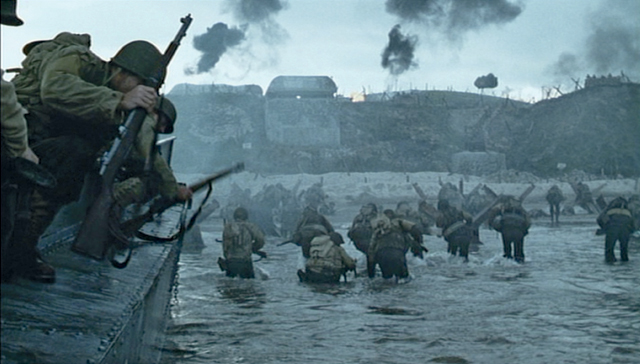
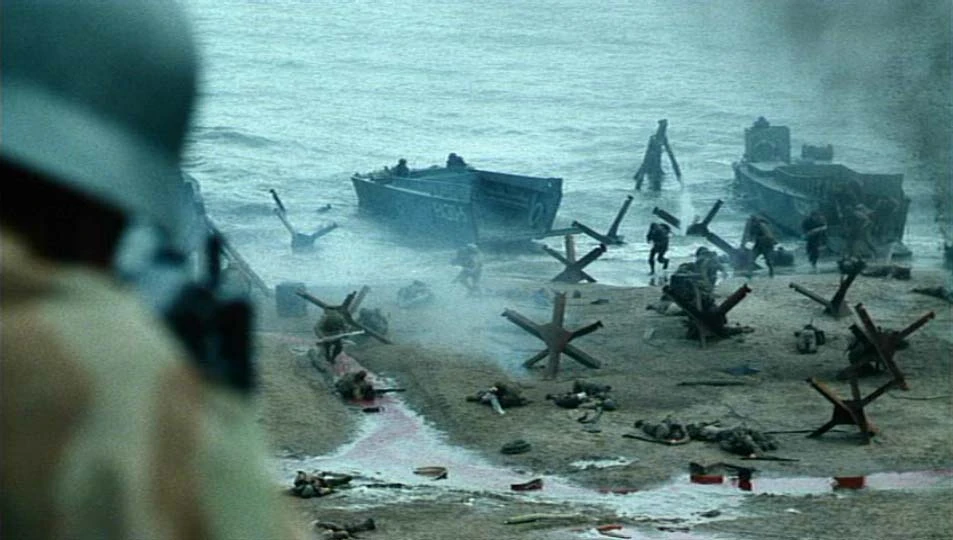
Mood and Tone of D-Day scene from Saving Private Ryan

  • Mood and Tone of a Scene
    Saving Private Ryan
    Image result for d day scene saving private ryanOne particular scene in the film “Saving Private Ryan” that gives an unsettling, queasy mood, is a scene where two soldiers are shot after trying to surrender. After the Allied forces take over the Normandy Coast, they move farther into the country of Normandy and begin to wipe out German defense areas. After invading an area, two soldiers hop out of the trenches with their hands up pleading for their lives in a foreign language. Two U.S soldiers walk up to them and ask, “What? What was that?” and shoot them in the head a moment later. After shooting them, one of the soldiers says in a jokingly tone, “What was he trying to say?”, and the other soldier replies, “Look I washed for supper,” in a jokingly tone as well. Even though the two foreign soldiers were enemies, I felt it was uncalled for and quite foul for the two U.S. soldiers to kill them, despite them trying to surrender. The fact someone could take a life, especially someone trying to surrender, and laugh about it, really made me think how cruel people in this world can be.
    Image result for d day scene saving private ryanAfter researching this scene a bit further, I found that the two soldiers coming out of the trenches surrendering were speaking Czech. The two foreign soldiers were trying to say, “Please don’t shoot me, I am not German, I am Czech, I did not kill anyone!” In addition from my research, I found that Czechoslovakia was conquered by Germany in 1939, and as a result Czechoslovakian soldiers and citizens were forced to fight for Germany. Just as in the film, other countries that were conquered by Germany were forced to aid and fight for Germany as well. Many lives that wanted no part of Nazi Germany’s reign of terror were forced to support them, or faced death, but ironically enough, either way these people were not safe. No matter what these people who were forced to aid did, they still faced death from Allied forces because they could not explain that they were being forced to help.

    Quote Sandwich for D-Day article written by History.com


    Image result for d-dayAt the time, D-Day was the day that would determine the future of the world. Nazi Germany was quickly expanding across Europe and had no intentions of slowing down. The German army was not only one of the strongest army's in the world, but they were beginning to become even stronger. To prevent expansion of Nazi Germany across Europe and eventually the Eastern hemisphere, the Allied forces had to begin an invasion immediately. In the article D-Day, written by History.com, the author states that, "The Normandy landings have been called the beginning of the end of war in Europe." According to the author, the Normandy landings were the beginning of the end of the World War in Europe. The Allied forces established their presence in Normandy and moved into Europe to liberate the country, which also prevented and stopped expansion of Nazi Germany.

    Character Analysis for Captain Miller from Saving Private Ryan

    Character Analysis
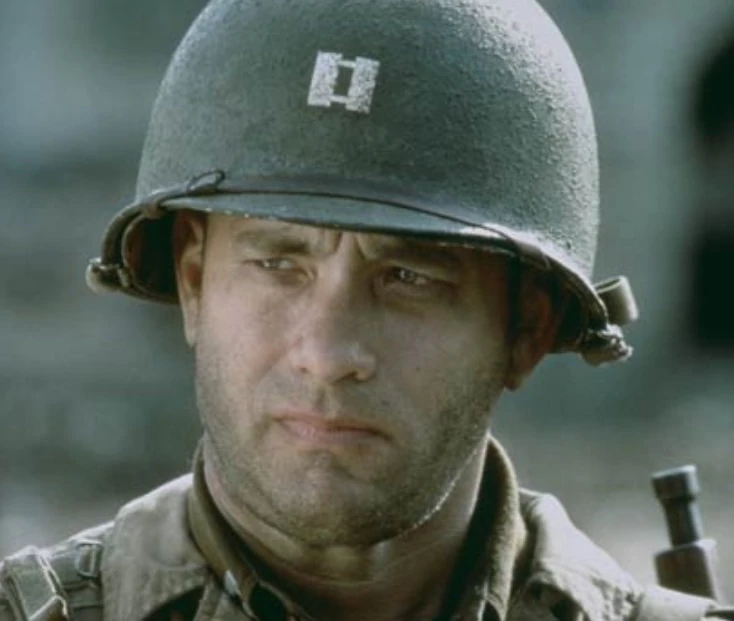
                    The main character in the film Saving Private Ryan, is Captain Miller. Captain Miller is played by Tom Hanks and is otherwise known as John Miller. He is white man with a very stern personality through the entire film showing next to almost no emotion through the film. His own squad knows very little about him because he does not speak much unless giving orders. Although he generally keeps to himself, he leads his squad through the beginning invasion and their mission of retrieving Private Ryan.
                    Captain Miller, before the war, was a high school teacher. Not much is said as to why he decided to join the army, but most men at the time were proud to be apart of the U.S Army to defend their country. Aside from this, not much else is said about Captain Miller’s life before the army.
                    Throughout the movie, Captain Miller is a very hard individual to read. He keeps a serious face through all situations and thinks more intelligently than morally, which can be seen when a member of his squad tries to save a young girl, but his shot and killed after Miller told him to leave the girl alone. Captain Miller’s own squad hound him with questions throughout the film about his personal life and current well-being, but ultimately brushes the questions off. At one point, his own squad mates even make a bet as to who can find out the most information about him.
                    It is hard to say how Captain Miller feels about himself because of his keep to himself attitude, but it is very easy to see he has a lot of things he does not want to talk about. Although he is generally quiet about his personal life before the war, he does interact with his other squad members about other topics, but seldom ever begins conversation, unless giving orders. Miller mostly keeps a serious face through all situations whether they are uplifting, or sad, except for one scene where a medic in is unit dies. After the death of the medic, Miller can be seen trying his best to hold in tears because of feeling somewhat responsible for the death.
                    Ultimately, Captain Miller is a very stern, keep to himself man who does a great job leading his squad through rough moments of their mission. He thinks intelligently and does what is best for his men, as well as does what he has to do in hard decision moments.
    Image result for john miller saving private ryan

    Act 3 Scene 1 M. Butterfly Summary and Analysis

    • Act 3 Scene 1
      Quote Summary and Analysis
      “The West has sort of an international rape mentality toward
      the East … Basically, “Her mouth says no, but her eyes say yes.”
      The West thinks of itself as masculine — big guns, big industry,
      big money — so the East is feminine — weak, delicate, poor …
      but good at art, and full of inscrutable wisdom — the feminine
      mystique. Her mouth says no, but her eyes say yes. The West
      believes the East, deep down, wants to be dominated —
      because a woman can’t think for herself.”
      Asian countries have the notion that Westerners view Orientalas as being feminine, weak, fragile, and lustful sexual objects. Since the West is viewed as a big, masculine, dominant, and powerful country; they deceive themselves into thinking that Orientals lust for Western dominance and control. There is this Western misconception that Oriental males poses feminine traits; therefore, they desire Western dominance and control. Also, the Oriental women hold the Westerners accountable for the ill logic that Oriental women, “...mouth say no, but her eyes say yes.”  The Westerners, as demonstrated in this play, believe they Oriental women secretly desire dominance from a Western man, but neglect it. So, the Western man receives mixed signals when looking into her fearful eyes, which consequently causes him to  wrongly infers that she wants to be controlled by him. Ultimately in the eyes of the West, unknowing Oriental women crave for men from big countries. The West has created this facade that their “masculinity” gives them the right to establish dominance over “feminine” countries. That these “feminine” countries must please them whether they like it or not.
      This quote is coming from Song has he explains how he deceived Rene all of these years. Song goes into detail how he knows the Westerner mentality that Asian countries are nothing, but small, weak, and fragile countries that do not know what they want and hope to be controlled by the powerful West. During the time, women did not hold a lot of power because women were seen as weak and fragile. Because of this, Western men held the idea that women could not think for themselves, since they did not have the strength to fend for themselves. Song explains how Westerners correlate these ideas of weakness and delicacy with the conditions of the East, giving the West the idea that these weak Asian countries are hoping to receive some control from the all mighty and powerful West. He notes that the justification of this rape-mentality is the feeling of entitlement, from being from a powerful country.
      • Image result for m. butterfly

      Friday, January 12, 2018

      Book Out of Your Past

      Book Out of Your Past: American Sniper
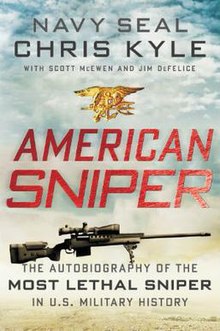
      American Sniper book.jpg
      The title of one of my favorite books from my past is “American Sniper,” an autobiography written by Chris Kyle. Chris Kyle is a former Navy SEAL who was the deadliest marksman in U.S military history with 160 confirmed kills, but according to his former SEAL teammates he had twice that. I read this book my junior year of high school as an AR book. I actually found the book when I was cleaning a storage room for a teacher and thought it would be an interesting read, despite never really having a strong love to read. The book follows Chris Kyle’s upbringing as a child, his early adult life before becoming a Navy SEAL, and his marriage with his wife Taya, as well as their marriage complications because of his deployments. Kyle also documents his four deployments in the Iraq War between the years of 1999-2009. He writes of all the horrors of war he sees while in service and documents some of his higher ranked kills. Fortunately, Kyle survives all four deployments, but unfortunately is killed by a former veteran who was suffering from severe PTSD. I remember this book because it was one of the few books I have actually sat down, read, and enjoyed. Some of my favorite movies are war movies, so to actually read a war book was an interesting change. There is one particular part of the book I enjoyed and it was Kyle describing his training in the BUD/S program. The BUD/S program is a 6 month training course held for SEAL training and it is said to be one of the toughest both physically and mentally training courses today. Kyle explains all of the physically demanding exercises he had to endure, such as carrying a 200 pound log with a team up and down a beach, entering the freezing ocean to swim meters out, and being woken up at 5 am every day to repeat the cycle again. This part was one of my favorite parts because it is crazy to think how some human bodies have the capability of handling that much stress. I would recommend this book to anyone in the class who enjoys watching or reading about the military.